
Flamstead Village School
Music
Our Children as Musicians
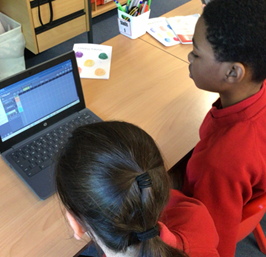
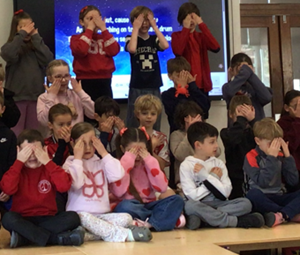
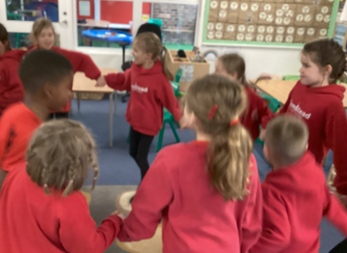
At Flamstead, our pupils will learn to be musicians by engaging in a progressive and inclusive curriculum built around the principles of the Charange Music Scheme. Through a spiral approach, pupils revisit and deepen their understanding of key musical skills – listening, singing, playing, improvising, composing and performing – over time. Central to this approach is the belief that all children are musical, and our curriculum ensures that every child can access and enjoy music-making, regardless of prior experience. Using a wide range of high-quality, diverse musical genres and styles, pupils develop their musicianship through active participation, with singing at the heart of learning. They explore pulse, rhythm, pitch, and notation in a practical and engaging way. Our curriculum aims to foster a lifelong love of music, enabling every pupil to see themselves as musicians.
Our Intent
At Flamstead, we have constructed our curriculum with a manageable amount of well-chosen knowledge and skills with focus on the most important aspects. We gradually but explicitly develop substantive and disciplinary knowledge across our foundation subjects. Disciplinary knowledge broadens knowledge and skills further than just the substantive content.
We aim to give our children ‘mirrors’ to develop positive self-identity, to build belonging and feel empowered, and we aim to give them ‘windows’ to have broad horizons, and experience success.
The content of our curriculum has carefully chosen content with logically sequenced learning that builds gradually and cumulatively, with a tight spiral of learning, allowing our children to revisit their learning to ensure it is embedded and secure.
All children will experience the accumulation of knowledge and skills which closes gaps rather than allowing them to open. This builds greater equity for pupils across the curriculum and the learning environment, supporting our children regardless of disadvantage, SEND, background or previous experiences.
Our curriculum enables teaching to promote disciplinary learning and allows children to develop their thinking, beyond just the substantive, so that they ask questions, gather, interpret and evaluate information, make decisions and draw conclusions.
We use concepts and threads to shape our curriculum so that pupils build knowledge and skills sequentially and cumulatively.
To implement our foundation curriculum intent in class, teachers will:
- Have a strong, shared understanding of the school’s curriculum and its approach to teaching and assessment.
- Have a knowledge of the subjects that they teach and if they have gaps in their knowledge, they are supported so that ineffective teaching does not disadvantage pupils.
- Adapt their teaching appropriately by providing reasonable adjustments or adaptations for specific pupils’ needs which are targeted and effective in reducing barriers.
- Will present information clearly and allow pupils to transfer key knowledge to long-term memory.
- Use teaching resources and materials to children can achieve the aims of the curriculum.
- Ensure knowledge and skills build on what has been taught before and prioritise feedback.
- Check pupils’ understanding systematically, identify misunderstandings and adapt teaching as necessary to correct these.
- Ensure time is available for revisiting content, retrieval practice and dealing with gaps in knowledge and skills.
Progress and Assessment
- What does it mean to make progress in foundation subjects?
- How can we ensure children get better at foundation subjects as they move through school?
- We will assess the children’s different starting points and identify any gaps in pupils’ knowledge.
- Gaps and misconceptions will be tackled quickly.
- Assessment will be used effectively to inform teaching and learning.
- We will help pupils embed key concepts, use knowledge fluently and develop their understanding.
As a school, to ensure we are providing the very best curriculum, we will:
- Regularly evaluate the quality of our curriculum and take targeted actions for improvement where needed.
- Make sure our decisions about the curriculum are refined over time and that they are based on evidence and insight from within school and beyond our school.
- Incorporate new research, information and statutory Government guidance.
- Make adaptations that focus on pupils’ long-term success rather than short-term fixes.
- Ensure our curriculum is always evolving to give our children knowledge, skills and experiences that help them succeed.